

Moving a piano is rarely just another box on a checklist. It’s the piece of furniture that makes you hold your breath—one wrong tilt, one unexpected bump, and the instrument that carries memories (not to mention a five‑figure price tag) could be damaged. If you live in Ottawa, you already know that our city’s mix of historic homes, narrow Centretown staircases, and modern high‑rises adds another layer of complexity.
This complete guide to piano moving Ottawa residents trust was created to answer every question you haven’t even thought to ask yet. Whether you own a cherished upright, a grand that’s the heart of your home, or a digital piano you rely on for lessons, you’ll learn exactly what to expect. We’ll break down real costs, show you what professional movers do behind the scenes, help you decide between DIY and hiring experts, and cover the after‑move essentials like tuning, tipping, and insurance. By the time you finish reading, you’ll have a clear roadmap for a smooth, stress‑free piano move—with no surprises.
How Much Does Piano Moving Cost in Ottawa?
Piano moving costs in Ottawa vary more than people expect, and that’s because no two pianos or homes are alike. The final price tag depends on three core factors: the type of piano, the distance it travels, and how accessible both homes are. A straightforward ground‑floor move in Orleans will look completely different from a grand piano descending a tight Glebe staircase.
Local Piano Moving Costs (Within Ottawa)
For moves within the city—say from Alta Vista to Kanata—local piano movers typically charge based on an hourly rate plus the complexity of the job. As a general guide:
- Upright piano: $250 – $450
- Grand or baby grand piano: $400 – $800
These ranges assume standard access (no more than one or two flights of stairs, reasonable carry distance from the truck to the door). If the piano needs to be craned out of a high‑rise or manoeuvred through a tricky entrance, additional fees apply.
Long‑Distance Piano Moving Costs
When a piano is moved outside the Ottawa area—to another city in Ontario, Quebec, or beyond—pricing shifts to a flat‑rate model based on weight, distance, and specialised packing. A long‑distance move can start around $800–$1,500 for an upright and $1,500–$3,000+ for a grand piano. The wide range reflects whether the move requires dedicated truck space, climate control, and how far the crew travels.
Add‑Ons That Affect the Final Price
Reputable piano movers in Ottawa will give you an all‑inclusive quote after an in‑home assessment, but it helps to know what factors can increase the price:
- Stairs: Each flight beyond the ground floor adds time and risk. Expect $50–$150 per flight per piano.
- Long carry: If the truck cannot park close to the entrance and the crew has to carry the piano a significant distance, an extra fee is added.
- Packing services: Some pianos require more than blankets—antique pianos or grands with delicate finishes may need custom crating.
- After‑hours or weekend moves: Moving on a Saturday or outside of normal business hours often comes with a small premium.
A key takeaway from this piano moving guide Ottawa homeowners appreciate is to never accept a quote given over the phone without an in‑person visit. Professional crews will walk through your home, measure doorways, assess staircases, and inspect the piano itself before giving a firm price. That’s the only way to avoid surprise charges on moving day.
Want a deeper look at pricing? Check out our detailed breakdown of piano moving costs in Ottawa.
DIY vs Professional Piano Movers – What’s the Right Choice?
There’s a reason the phrase “it takes a village” applies to pianos. On paper, moving a piano yourself seems straightforward: rent a truck, recruit a few friends, and save a few hundred dollars. In reality, the risks often outweigh the savings.
The Real Cost of a DIY Piano Move
When you attempt a DIY move, you’re not just paying for a truck rental. You’re shouldering:
- Equipment costs: Furniture dolly, moving blankets, heavy‑duty straps, ramp—easily $100–$200.
- Injury risk: An upright piano weighs between 300 and 900 lbs. One wrong step can lead to crushed toes, back injuries, or worse. Emergency room visits are far more expensive than hiring movers.
- Damage potential: A dropped piano can suffer cracked soundboards, broken strings, or ruined cabinetry. Flooring and door frames also pay the price.
- Friendship tax: Asking friends to help move a piano is a big ask. If something goes wrong, it can strain relationships that matter far more than the moving budget.
When DIY Might Be Acceptable
DIY isn’t always a bad idea. There are limited scenarios where it can be done safely:
- The piano is a small spinet or digital model weighing under 300 lbs.
- Both homes have ground‑floor, level access with no stairs.
- The distance is very short (within the same building or next door).
- You have at least four strong, experienced helpers and access to proper equipment (piano skid board, not just a dolly).
Even then, a professional crew brings something you can’t replicate: muscle memory. They’ve moved hundreds of pianos and know exactly how to balance, pivot, and protect.
Why Professional Piano Movers Are Worth the Investment
Hiring a company like Ottawa Movers isn’t just about avoiding strain—it’s about peace of mind. With 48+ years of experience and over 23,000 successful moves in the capital region, our CAM‑trained professionals bring specialized knowledge that general movers simply don’t have.
- Specialised equipment: Piano skid boards, leg‑removal tools, stair rollers, and custom‑fit covers are standard gear. These tools are designed specifically to prevent tipping and protect finishes.
- Trained crews: Our teams are certified through the Canadian Association of Movers (CAM), ensuring proven techniques in lifting, balancing, and securing pianos to prevent damage. This rigorous training fuels our Damage‑Free Guarantee.
- Insurance coverage: When you hire a professional, your piano is protected. We offer up to $1.5 million in replacement valuation coverage for your ultimate peace of mind.
- Transparent pricing: No hidden fees. No surprises for stairs, fuel, or blankets. The price we quote is the price you pay.
- Local expertise: In Ottawa, we know which buildings require elevator reservations, which streets need parking permits, and how to handle historic homes with narrow stairwells.
This guide to moving a piano in Ottawa aims to give you the facts so you can make a confident decision. For most people, the few hundred dollars saved by DIY is not worth the risk of injury, damage, or stress.
Learn more about the potential pitfalls of doing it yourself on our page: DIY vs Professional Piano Movers Ottawa.
The Piano Moving Process – How Professionals Work
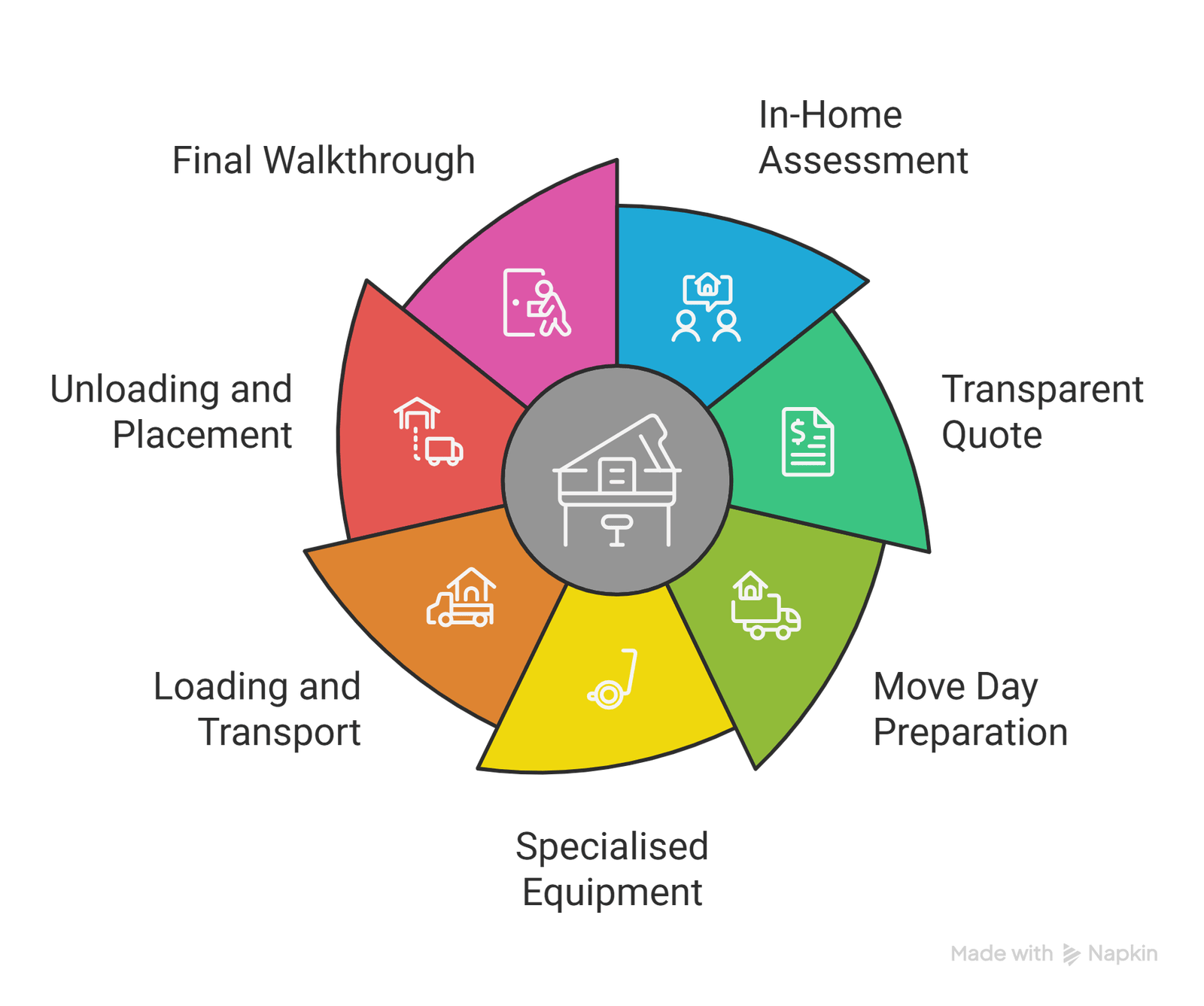
One of the biggest sources of anxiety for piano owners is simply not knowing what will happen on moving day. When you hire a professional crew, the process is methodical, transparent, and designed to put you at ease.
Here’s a step‑by‑step look at how Ottawa Movers handles a typical piano move in Ottawa.
1. In‑Home Assessment (Before Moving Day)
A senior mover visits your home to inspect the piano, measure doorways and hallways, and map out the safest path. They’ll also check for potential obstacles like tight corners, steep stairs, or fragile flooring. This assessment is the foundation of the entire move—it ensures the crew arrives with the right equipment and a clear plan.
2. Preparation
On moving day, the crew begins by carefully preparing the piano. The lid is secured to prevent it from opening during transport. The piano is wrapped in heavy‑duty moving blankets, and delicate parts (like the legs of a grand piano) are removed and padded separately. Floor runners are laid down to protect hardwood or tile.
3. Equipment Setup
For upright pianos, a piano skid board is strapped securely to the back, creating a stable frame. For grands, the crew uses a skid board as well, often with additional support under the harp. Stair rollers are attached if stairs are involved, allowing the piano to glide smoothly without scraping.
4. Loading
With 3–5 movers for a grand or 2–3 for an upright, the team coordinates the lift. They tilt the piano onto the skid board, balance it, and carefully roll it to the truck. Inside the truck, the piano is strapped to the wall, often with additional padding between it and other items. Climate control is standard for long‑distance moves to protect the piano from temperature extremes.
5. Transport
During transport, the driver takes care to avoid sudden stops and rough roads. For moves across Ottawa, the truck is driven directly to the new location. For long‑distance moves, the piano may travel in a dedicated air‑ride vehicle.
6. Unloading & Placement
At the destination, the crew reverses the process—but with an important difference. They don’t just drop the piano anywhere. They place it exactly where you want it, reattach legs (for grands), level the instrument, and ensure it’s stable on the floor.
7. Final Walkthrough
Before the crew leaves, you’ll inspect the piano together. Any concerns are addressed on the spot, and you’ll sign off on the job. This final step is a hallmark of professional service—it’s your chance to confirm that everything went perfectly.
Understanding the piano moving process Ottawa residents rely on makes the experience feel less like a high‑stress event and more like a well‑orchestrated operation. When you see the method behind the work, you’ll understand why professionals are worth every dollar.
For a more detailed look at how we handle each phase, visit our page on the piano moving process.
Different Types of Pianos & How They Affect the Move
Not all pianos are created equal. The type you own dictates the crew size, equipment, and technique required. A complete guide to piano moving Ottawa always starts with identifying what you’re moving.
Upright Pianos
Uprights are the most common—and they’re deceptive. They weigh anywhere from 300 to 900 lbs, and their tall, narrow shape makes them prone to tipping. Moving an upright requires a minimum of two movers (three for heavier models or stairs). The crew uses a piano skid board and straps to keep the unit vertical and stable throughout the move.
Grand & Baby Grand Pianos
Grand pianos are the heavyweights: 500 to 1,200 lbs, with a delicate structure. The legs must be removed, the lid is secured, and the entire instrument is placed on a custom skid board. Three to five movers are standard. One of the biggest challenges is manoeuvring a grand through doorways—professional movers know how to pivot the piano on its side without risking the harp or soundboard.
Antique Pianos
Antique pianos demand an extra layer of care. The wood veneers can be fragile, and original soundboards or ivory keys are irreplaceable. Professional crews use extra padding, avoid any adhesive tapes that could damage finishes, and often custom‑crate the piano for long‑distance moves. It’s not unusual to spend 20–30 minutes just on preparation for a truly delicate instrument.
Digital Pianos
Digital pianos are lighter—typically 100–250 lbs—but they have their own vulnerabilities. Electronics need protection from moisture and sudden shocks. While two movers can usually handle a digital piano, the crew still treats it with the same care as an acoustic model, ensuring that internal components are not jostled.
Each type influences the move in a different way. When you hire experienced piano movers, they adjust their approach based on the piano’s weight, dimensions, and sentimental value. No two moves are the same, and that flexibility is what separates specialists from general movers.
Learn more about how we adapt to different pianos on our page: how we handle different piano types.
After the Move – Tuning, Tipping & Insurance
The moving truck has driven away, your piano is in its new spot, and you’re breathing a sigh of relief. But the process isn’t quite finished. Three important after‑move considerations will protect your investment and show appreciation for the crew that made it happen.
Tuning After a Move
It’s normal for a piano to sound slightly off after a move. Changes in temperature, humidity, and even the vibration of transport can affect the tuning. Resist the urge to have it tuned immediately.
- Wait 2–4 weeks. This allows the piano to acclimate to its new environment. If you tune too soon, the strings may shift again, and you’ll end up paying for another tuning shortly.
- Find a qualified tuner. In Ottawa, many piano tuners are Registered Piano Technicians (RPT) with the Piano Technicians Guild. Ask your moving company for a referral—they often work closely with trusted tuners.
- Climate matters. Ottawa’s winters are dry and cold; summers can be humid. A good tuner will also assess whether the piano needs humidity control to stay stable long‑term.
Tipping Piano Movers
Tipping is a way to acknowledge exceptional service, especially when the crew dealt with difficult stairs, extreme weather, or went above and beyond to protect your piano.
- Standard tip: $20–$50 per mover.
- Percentage: 15–20% of the total move cost for service that exceeded expectations.
- When to tip more: If the move involved multiple flights of stairs, a long carry, or if the crew worked outside normal hours, consider adding extra.
- Cash is preferred. It allows the crew to split tips immediately and is always appreciated.
Insurance Coverage
Understanding your coverage is essential before the move. At Ottawa Movers, we provide clear options:
- Basic released‑value protection: Included at no extra cost. Coverage is limited to a minimal amount per pound, which is rarely enough to cover a piano’s true value.
- Full value protection (recommended): We offer up to $1.5 million in replacement valuation coverage, meaning the mover is liable for the full replacement value of the piano if it’s damaged or lost. For any piano worth more than a few hundred dollars, this is a wise investment.
Be sure to ask what is not covered—pre‑existing damage, for instance, is excluded. The crew should document the piano’s condition with photos or a written condition report before the move, so everyone agrees on the starting state.
We’ve created separate resources to help you navigate these after‑move steps:
Tuning after a move
How much to tip piano movers
Insurance coverage explained
Ottawa‑Specific Considerations for Piano Moving

Moving a piano in Ottawa comes with its own set of local nuances. Whether you’re in a historic Glebe townhouse or a new Kanata development, understanding these factors will help you prepare.
Neighbourhood Diversity
- Centretown & The Glebe: Older homes often have narrow staircases, sharp turns, and limited street access. Parking can be a challenge, and many buildings lack elevators. Professional movers familiar with these areas know to bring stair rollers and extra padding.
- Kanata & Orleans: Newer suburbs typically offer wider doorways and garages, which simplifies access. However, long driveways can add to the carry distance, and some homes have walkout basements that require careful navigation.
- Barrhaven & Riverside South: A mix of single‑family homes and townhouses. Townhouse moves often involve shared walkways and multiple stairs—planning is key.
- High‑rise condos downtown: Buildings like those on Rideau Street or near the Market require elevator bookings, proof of insurance, and sometimes parking permits. Professional movers handle these logistics so you don’t have to.
Seasonal Challenges
Ottawa winters are legendary. Snow, ice, and sub‑zero temperatures affect moving conditions in several ways:
- Slippery surfaces: Walkways and stairs need to be cleared and salted before moving day.
- Cold exposure: Pianos should not be left in an unheated truck for extended periods. Professional movers use climate‑controlled vehicles for long distances.
- Humidity swings: The extreme dryness of winter can cause wood to contract. A piano that was stable in its old home may need extra time to adjust.
Building Regulations & Permits
Many downtown Ottawa buildings require you to reserve the service elevator, provide a certificate of insurance, and sometimes pay a refundable deposit. Professional movers will coordinate with the building management to ensure all requirements are met before arrival.
Local Resources
Ottawa is home to numerous retirement communities (like those along Carling Avenue), music schools, and venues where pianos are frequently moved. A company with local experience can anticipate the unique needs of these environments, such as quiet‑hour restrictions or specialized access requirements.
For neighbourhood‑specific advice, visit our page on Ottawa‑specific considerations.
Ready to Move Your Piano in Ottawa? Get Expert Help
Moving a piano is one of the most nerve‑wracking parts of any relocation, but it doesn’t have to be. With the right planning, a clear understanding of costs, and a team that treats your instrument like the treasure it is, the process can be smooth and even surprisingly stress‑free.
We’ve built our reputation on 48+ years of experience moving pianos across Ottawa, from the narrow streets of the Glebe to the spacious homes of Barrhaven. Our CAM‑trained crews are equipped to handle every type of piano, every season, and every unique challenge this city presents. We carry up to $1.5 million in insurance, we never cut corners, and we back every move with a Damage‑Free Guarantee that our clients trust.
If you’re planning a piano move—whether it’s across town or across the province—let’s start with a conversation. We’ll come to your home, assess the piano and the route, and give you a clear, all‑inclusive quote with no hidden fees. No pressure, just the expertise you deserve.
[Get Your Free Piano Moving Quote Today]
Call us or fill out our online form to schedule your in‑home assessment.
Frequently Asked Questions About Piano Moving in Ottawa
How much does it cost to move a piano locally in Ottawa?
Local moves typically range from $250–$450 for uprights and $400–$800 for grands, depending on stairs, carry distance, and accessibility. For an accurate quote, an in‑home assessment is essential. (See Section 1 for a detailed cost breakdown.)
Can two people move an upright piano?
Two experienced professionals can move an upright piano under ideal conditions (ground floor, no stairs, short carry). However, most upright moves use three movers for safety, especially when stairs or tight spaces are involved. DIY with two untrained people is strongly discouraged.
How long does a piano move take?
A local piano move typically takes 1–3 hours from start to finish, including preparation, transport, and placement. Long‑distance moves vary based on distance; the moving company will provide an estimated window.
Do pianos need to be tuned after moving?
Yes. It’s normal for a piano to go out of tune after a move. Wait 2–4 weeks for the instrument to acclimate to its new environment before scheduling a tuning. (See Section 5 for more on after‑move tuning.)
Are piano movers worth the cost?
For most pianos, absolutely. Professional movers bring specialised equipment, trained crews, and insurance that DIY efforts cannot match. The cost is a fraction of what you’d pay to repair a dropped piano or treat an injury.
How do I find reliable piano movers in Ottawa?
Look for companies that specialise in piano moving, offer in‑home assessments, have positive local reviews, and provide clear insurance options. Ask about their experience with your specific type of piano and neighbourhood. Ottawa Movers, with 48+ years and 23,000+ local moves, is a trusted choice.
What’s the most difficult piano to move?
Antique grand pianos are generally the most challenging due to their weight, fragility, and often intricate construction. Concert grands (9 feet or longer) also require extra‑large crews and sometimes specialised rigging.
How should I prepare my piano for moving day?
Clear a path from the piano to the exit, remove any obstacles, and ensure the movers have a clear workspace. If you have a grand piano, you may want to remove any decorative items from the top. Leave the technical preparation—like wrapping and securing—to the professionals.