
Learning how to pack for a long distance move from Ottawa is the most critical factor for protecting your belongings during transit. The key is using the right materials and following systematic organizational strategies for every box. This comprehensive guide provides homeowners and businesses with expert long distance packing Ottawa techniques. We cover essential supplies, room-by-room methods, and specialized tips to ensure every item arrives safely, making your relocation stress-free.
Essential Supplies: What You Need for Effective Long Distance Packing Ottawa
Successful long distance packing Ottawa begins with the right materials. Skimping on supplies is a common mistake that leads to damaged goods and costly claims. Start by acquiring sturdy, double-walled corrugated boxes in various sizes. Standard boxes are fine for local moves, but long transit requires superior protection. Focus on quality packing tape, professional bubble wrap, and acid-free packing paper. Utilizing the correct Ottawa moving supplies is an investment that protects your valuable assets.
Furthermore, do not overlook labeling tools. A clear, large marker, colored stickers, and an inventory sheet are essential. Consider specialty boxes for items like clothing (wardrobe boxes) and artwork. While you can use some household items for padding, investing in professional materials for fragile goods is highly recommended. Our experience shows that proper supplies minimize risk, ensuring your items arrive in the same condition they left your Ottawa home.
Decluttering Before Packing: A Critical Step in the Ottawa Relocation Packing Process
Before you tape up the first box, commit to decluttering before packing Ottawa. This saves time, money, and reduces stress. Long-distance moving costs are based on weight or volume, meaning every item you eliminate saves you money on the final moving bill. Start by targeting areas that hold unused items, like basements, attics, and closets. This foundational step is the best way to optimize your Ottawa long distance packing.
- The Six-Month Rule: Get rid of anything you have not used in the last six months (excluding seasonal gear).
- Donate vs. Dispose: Donate usable items to local Ottawa charities (like the Ottawa Mission). Properly dispose of non-recyclable garbage.
- Sell High-Value Items: Use online marketplaces to sell larger furniture or electronics. Use the proceeds to cover Ottawa moving supplies.
- Scan Documents: Digitalize old files and paperwork. This reduces the weight and bulk of heavy paper boxes.
- Consolidate: Group similar items together to assess if they are truly needed at your new location.
This initial downsizing is a transformative step. It reduces the number of boxes we handle and makes the actual packing for a move Ottawa far more manageable. Do not pay us to move items you no longer want or need.
Systematic Packing Strategies: How to Organize Packing for a Long Distance Move Ottawa
The most effective strategy for long distance packing Ottawa is the room-by-room approach, moving from the least-used areas to the most-used ones. Start in the garage, basement, or guest room. Leave the kitchen and bedroom essentials until the final week. This organized method prevents you from having to dig through packed boxes for essential daily items. This systematic process is key to a successful step by step long distance packing guide Ottawa.
Always pack boxes densely but avoid overfilling them to the point they bulge or are too heavy to lift. A good rule of thumb: put heavy items (books, tools) in small boxes and light items (pillows, blankets) in large boxes. Use the “layered” method for items in transit: place a layer of crumpled paper at the bottom, then the item, then fill all empty spaces with more paper or padding. This prevents movement inside the box, which is a major cause of damage.
Crucially, maintain a detailed inventory sheet. As you finish each box, record the number, the room, and a brief description of the contents. This is vital for insurance purposes and for efficient unpacking at your new destination. Proper labeling and inventory tips for Ottawa packing ensure that, upon arrival, you can easily prioritize which boxes need unpacking first.
Protecting Fragile Items: Ottawa Packing Strategies to Avoid Damage in Transit
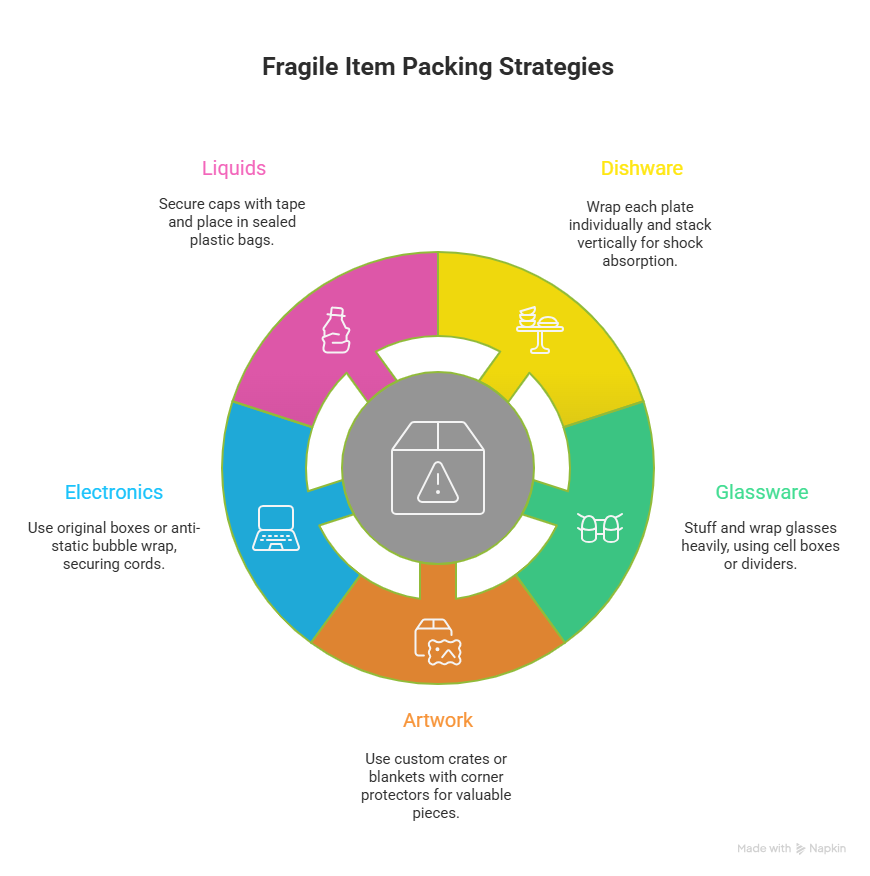
Long-distance transit is inherently riskier than a local move due to extended handling and travel time. Protecting fragile items must be a top priority in your long distance move packing checklist. Do not rely solely on newspaper; the ink can transfer. Use white packing paper or bubble wrap liberally. Our experience shows that proper wrapping is the best defense against bumps and vibration.
- Dishware Technique: Wrap each plate individually in paper. Then, stack them vertically (like records in a box), not flat. Vertical stacking absorbs shock better.
- Glassware/Stemware: Stuff paper or socks inside glasses and wrap the exterior heavily. Use dedicated cell boxes or create protective dividers within the box.
- Artwork/Mirrors: For valuable pieces, consider custom-built wooden crates. If using a box, wrap the item in moving blankets and secure it with corner protectors.
- Electronics: Use original boxes whenever possible. If not, use anti-static bubble wrap and ensure cords are packed with their corresponding device.
- Liquids: Movers cannot transport flammables. For non-hazardous liquids, secure caps with tape and place them in a sealed plastic bag inside a box.
While professional services offer the highest level of protection, mastering these specialized techniques helps secure your most delicate belongings. Remember to clearly label these boxes “FRAGILE” on all sides. This crucial step alerts our team to handle these items with extra care, minimizing the risk of damage in transit.
The Final Boxes: Packing Room by Room for Ottawa Long Distance Relocation
As you approach moving day, focus on the final areas: the kitchen and bedrooms. For the kitchen, use a systematic approach for heavy appliances and pantry items. Dispose of all perishables. Pack knives and sharp objects securely in their original blocks or wrapped heavily and clearly marked for safety. Use soft kitchen towels to wrap items like baking sheets and pots, maximizing space and utility.In the bedrooms, use wardrobe boxes for hanging clothes. This is a time-saver and protects garments from wrinkling. Create a “First Night Box” containing bedding, toiletries, essential tools, and a change of clothes. This box should be the very last item loaded and the first item unloaded. This final organization ensures a comfortable, functional start at your new destination, concluding your long distance move packing tips Ottawa successfully.
Turn Packing Stress into Confidence with Ottawa Movers
Mastering long distance packing Ottawa is challenging, but these methods ensure maximum protection for your belongings. For items that require specialized attention, or if time is your most valuable asset, let us step in. Our professional team has the experience and high-quality Ottawa moving supplies to pack your entire home efficiently and safely.
Do not risk damage during a long move. Trust Ottawa Movers to execute your long distance move packing checklist flawlessly. We guarantee that every box is packed according to industry best practices. Get a free, no-obligation quote for our full-service packing and moving solutions today!
Click here for expert packing services and a long-distance moving quote!
Top 8 FAQs on How to Pack for a Long Distance Move from Ottawa
- Q: What is the biggest long distance move packing mistakes Ottawa residents make?
A: The most common mistake is mixing items from multiple rooms in one box. This makes unpacking chaotic and inventory tracking nearly impossible. Always stick to one room per box and label it clearly to ensure an organized and efficient unpacking process. - Q: Should I use duct tape or packing tape for my moving boxes?
A: Always use specialized packing tape. Duct tape does not adhere securely to cardboard and often peels off in transit, compromising the structural integrity of the box. High-quality, wide packing tape provides the necessary strength for a long journey. - Q: How can I pack books efficiently for a long-distance move?
A: Books are heavy, so they should only be packed in very small, sturdy boxes. Fill small gaps with packing paper to prevent shifting. Label these boxes as “HEAVY” to alert the moving crew and prevent injury during the loading process. - Q: What packing supplies do I need in Ottawa for long moves besides boxes?
A: Essential supplies include professional-grade tape, bubble wrap, stretch wrap (for furniture), and white packing paper. You also need heavy-duty markers for labeling, plus blankets or furniture pads for wrapping large items that will not fit in boxes. - Q: How should I handle clothing that is already on hangers?
A: The most time-efficient method is using wardrobe boxes. These specialized boxes allow you to transfer clothes directly from the closet on the hanger, protecting them from wrinkles. This saves immense time both during packing and unpacking. - Q: Is it safe to use old grocery bags or newspaper for padding fragile items?
A: Newspaper is generally discouraged because the ink can transfer onto your belongings, requiring extra cleaning. For padding, use white packing paper or soft household linens (towels, t-shirts). This is a great affordable packing idea for Ottawa movers. - Q: How do long distance movers Ottawa ensure furniture safety in transit?
A: Reputable long distance movers Ottawa use professional-grade stretch wrap and heavy-duty moving blankets to secure furniture. They often disassemble items like beds and tables and pad them thoroughly, ensuring they are protected against scratches and jostling. - Q: When should I start buying my packing supplies?
A: You should start securing your essential packing supplies 6 to 8 weeks before your move. This allows you to take advantage of sales and prevents a stressful last-minute rush, especially when seeking specialty items like wardrobe boxes.
